Write It to Remember: How Pen Strokes Shape a Sharper Mind

Today we dive into the science of handwriting, tracing how deliberate pen movements strengthen memory, heighten focus, and unlock steady productivity. Drawing on research, lived experiences, and practical rituals, we invite you to test, adapt, and share what truly changes your day. Bring a favorite notebook, sharpen a pencil, and discover measurable gains that feel surprisingly human, calming, and sustainable across busy weeks, deep projects, and thoughtful learning.

Inside the Brain: The Handwriting Advantage

Handwritten lines recruit motor cortex, cerebellum, visual processing, and associative memory in one coordinated effort, producing richer encoding than tapping keys. The deliberate pace forces selection and synthesis, deepening understanding. As grip pressure changes and strokes vary, your senses collaborate, forming unique neural traces that remain easier to recall under stress. This integrated choreography helps stabilize attention, resist distractions, and translate fleeting impressions into structured knowledge that endures beyond a single reading.

Remember More, Forget Less

Handwriting promotes generative processing: translating information in your own words, connecting ideas, and drawing simple diagrams that compress complexity. Studies comparing longhand with laptops consistently report stronger conceptual recall, especially when ideas must be applied. You keep fewer verbatim details but gain more transfer power. Pair handwritten summaries with spaced reviews, and memories consolidate efficiently. Mark margins for future questions, then return to answer them, transforming passive notes into a lightweight learning system you trust.

Conceptual Notetaking Beats Transcription

When you stop chasing every sentence and instead design a concise map, you force semantic decisions that create sturdy memory traces. Research on longhand note-taking shows better performance on application questions because interpretation matters more than capture. Try compressing each page into three bold lines, supported by sketches or arrows. Later, those anchors rehydrate complex content quickly, helping you teach, synthesize, and adapt ideas without rereading entire chapters or replaying lengthy recordings.

Spacing, Retrieval, and Margins

Set aside brief sessions to revisit pages at increasing intervals, answering margin questions from memory before peeking. This effortful recall strengthens pathways and highlights weak spots. Use symbols to flag confusions, wins, and possible experiments. Returning to the same physical layout triggers contextual cues, accelerating reconstruction. Over weeks, your notebook becomes a rehearsed performance rather than a cluttered archive. Progress feels visible, because your marks, dates, and corrections show a tangible trail of understanding.

Stories on the Page

Narrative structures help memory stick. Try giving complex topics a beginning, conflict, and resolution across a spread. Write characters as concepts, motives as constraints, and turning points as breakthroughs. Handwritten arrows, borders, and asides reinforce pacing. The storyline guides recall later, even under pressure, because events are easier to remember than isolated facts. By dramatizing causal links in ink, you transform abstraction into scenes your mind revisits willingly, long after initial exposure fades.

Focus Without Notifications
Analog tools shrink your field of view to a page, eliminating digital cues that invite switching. The body senses stillness, the hand moves with intention, and time loses its jagged edges. When thinking stalls, doodles and headings keep momentum without escaping to a browser. Micro-frictions protect attention like guardrails. These quiet constraints tame urgency, paving space for precision. Many report calmer mornings, steadier afternoons, and a gentle satisfaction from finishing what actually matters today.

Single-Task Rituals

Begin sessions by rewriting the purpose line: one sentence that states exactly what progress looks like now. Then box three sub-steps, check your timer, and start the first line. The page becomes a contract. If thoughts wander, underline the last clear word and continue. This ritual teaches continuity, making re-entry painless after interruptions. Over days, your brain associates this sequence with flow, so ramp-up speeds improve and context rebuilds naturally without exhausting willpower.

Mindful Lines and Loops

Trace slow curves while breathing evenly for thirty seconds before drafting. These loops calibrate pace and hand pressure, inviting calm attention. Pair strokes with exhale counts or quiet words like steady and clear. This anchors awareness in tactile sensation, tamping anxious impulses to check elsewhere. Once settled, switch to purposeful lines and headers. The transition marks intent, signaling that thinking now has a visible path. Repeat between sections to reset gently, without losing continuity.

Designing a Distraction-Resistant Desk

Keep only the active notebook, pen, index cards, and a small timer within reach. Place your phone in another room or face-down in a drawer. Use a standing clip to display just one reference page. These simple boundaries reduce options and prevent mindless detours. A dedicated tray for finished pages rewards closure. Photograph important spreads afterward, then archive. The ritual of clearing, writing, and capturing bookends sessions, keeping clutter from hijacking hard-won attention and momentum.

Analog Productivity Systems That Actually Stick

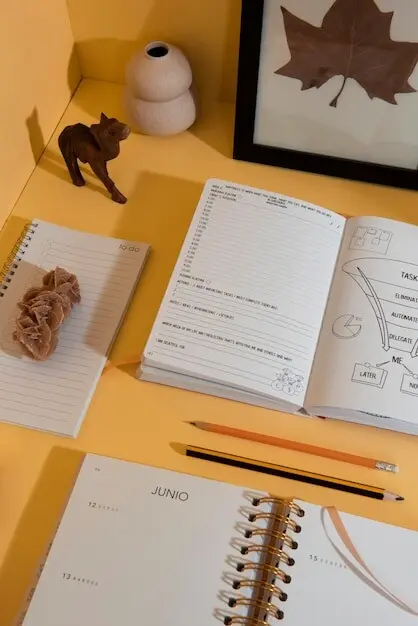
Paper-based systems work when they feel natural, quick, and honest. Pick layouts you can maintain on rushed days, not just perfect days. Mix weekly overviews with daily action lines and a lightweight backlog. Cross-link future dates using page numbers and simple symbols. The tactile act of migrating tasks exposes hidden resistance and prompts better choices. Instead of chasing novelty, refine your smallest repeatable moves. Share your favorite pages with us, and trade ideas that last.

Bullet Journal, Evolved

Keep bullets minimal: tasks, notes, and decisions. Add a left margin for energy estimates and a right margin for outcomes. Schedule migrations at week’s end, asking why items stalled. Rewrite only what you still intend to do. The discomfort of rewriting nudges clarity. Layer gentle trackers—sleep, focus, and wins—without turning pages into spreadsheets. Your notebook remains a living conversation with priorities, responsive to seasons, yet anchored by marks you can read at a glance.

Time-Blocking by Hand

Sketch hours down the margin and block commitments with bars, shading deep work in darker lines. Leave breathing spaces between blocks for resets. Writing blocks forces realism; there is only so much ink to place. At day’s end, annotate deviations, not with blame, but curiosity. Patterns emerge quickly: overstuffed mornings, missing buffers, fragile transitions. Tightening these loops on paper builds a sense of rightful pace, turning ambition into sequences you can steadily repeat.
Choose the Right Pen or Pencil

Experiment across gel, rollerball, fountain, and pencil leads to find satisfying feedback. Softer leads suit sketchnotes; finer nibs favor dense annotations. If your hand aches, reduce pressure, slow down slightly, or switch to smoother paper. Pens that glide too easily may speed thoughts beyond clarity. Keep two options handy—one bold for headings, one precise for detail. This tiny kit adapts quickly to shifting tasks, making each session feel responsive rather than constrained by tools.

Paper, Formats, and Layouts

Dot grid supports structure without shouting; blank pages suit sketches; ruled lines help steady scripts. A5 travels well; larger spreads invite expansive mapping. Pre-draw anchors—title, date, margins—so decisions start ahead of time. Reserve the lower right for summaries and the left edge for symbols. Consistency pays dividends because your eyes learn the map. Over time, layouts become muscle memory, cutting setup friction and leaving more attentional bandwidth for thinking that matters most today.

Healthy Posture and Speed

Set chair height so forearms rest level, relax shoulders, and tilt the page to match your hand. Write with arm movement instead of scrunching the wrist. Short bursts beat marathons; change grip gently if fingers tire. If lines get messy, pause for two breaths and recalibrate. Speed comes from clarity, not force. By respecting your body, you extend sessions comfortably, which multiplies focus hours across weeks. Comfortable writing is sustainable writing, especially during demanding projects.

Hybrid Workflows: Paper Meets Cloud

Analog and digital can cooperate beautifully. Capture ideas in ink, then archive, search, and share with lightweight tools. Scanning preserves context while letting you surface notes by tag or keyword. Tablets with low-latency pens emulate paper for traveling days. When review time comes, digital reminders point back to handwritten spreads. This loop keeps thinking human and retrieval efficient. Tell us what apps and scanners you trust, and we will compile a community-tested shortlist.
Use your phone to scan pages immediately after sessions, naming files with date and two keywords. Simple tags like project, meeting, or idea let you fetch notes fast. Optical character recognition helps with headings and printed labels. Link scans in task managers without duplicating content. During reviews, jump from a digital reminder to the exact page photo. The original layout anchors memory, while searchability removes friction. This bridge preserves context without sacrificing speed or portability.
Modern e-ink and high-refresh tablets now offer near-paper latency and pressure sensitivity. Calibrate stroke smoothing and palm rejection until lines feel trustworthy. Build a minimal palette—one pen, two thicknesses, a highlighter—to maintain analog simplicity. Export pages weekly to cloud folders named like your notebooks. When you need to collaborate, layer typed summaries over handwritten diagrams. You keep organic thinking intact, while teammates benefit from clarity. Share latency numbers or favorite stylus grips for curious readers.

Creativity, Ideas, and Flow

The hand encourages wandering that still moves forward. Sketching arrows, bubbles, and headlines makes ambiguity playful, creating pockets where connections appear. Constraints—one page, one color, five minutes—spark originality by narrowing choices. Morning pages clear mental fog; afternoon doodles reframe stubborn problems. Handwritten drafts accept imperfection, protecting momentum from perfectionism. Share a photographed spread of your favorite idea journey, and let others borrow structures that help them think bravely, kindly, and a little weirder.
Pirasanoravozorizentofari
Privacy Overview

This website uses cookies so that we can provide you with the best user experience possible. Cookie information is stored in your browser and performs functions such as recognising you when you return to our website and helping our team to understand which sections of the website you find most interesting and useful.